
Helping Teachers See Student Thinking in Digital Reading

Adding an annotation visibility system to help Mandarin teachers adopt digital literacy tools by bridging the gap between expert practices and new teacher needs.
Context
Level Learning is a K-12 literacy platform with a digital library of 1000+ books.
Teachers weren't using it—especially Mandarin teachers who were new to teaching literacy.
I want to understand why and design solutions to increase engagement.
Role
Product Designer
Duration
80 hours
Tools
Figma · Google Suites · Zoom
Responsibilities
User Research · User Testing · Wireframes · Prototype
THE PROBLEM
😀
Teachers can see student thinking
🫤
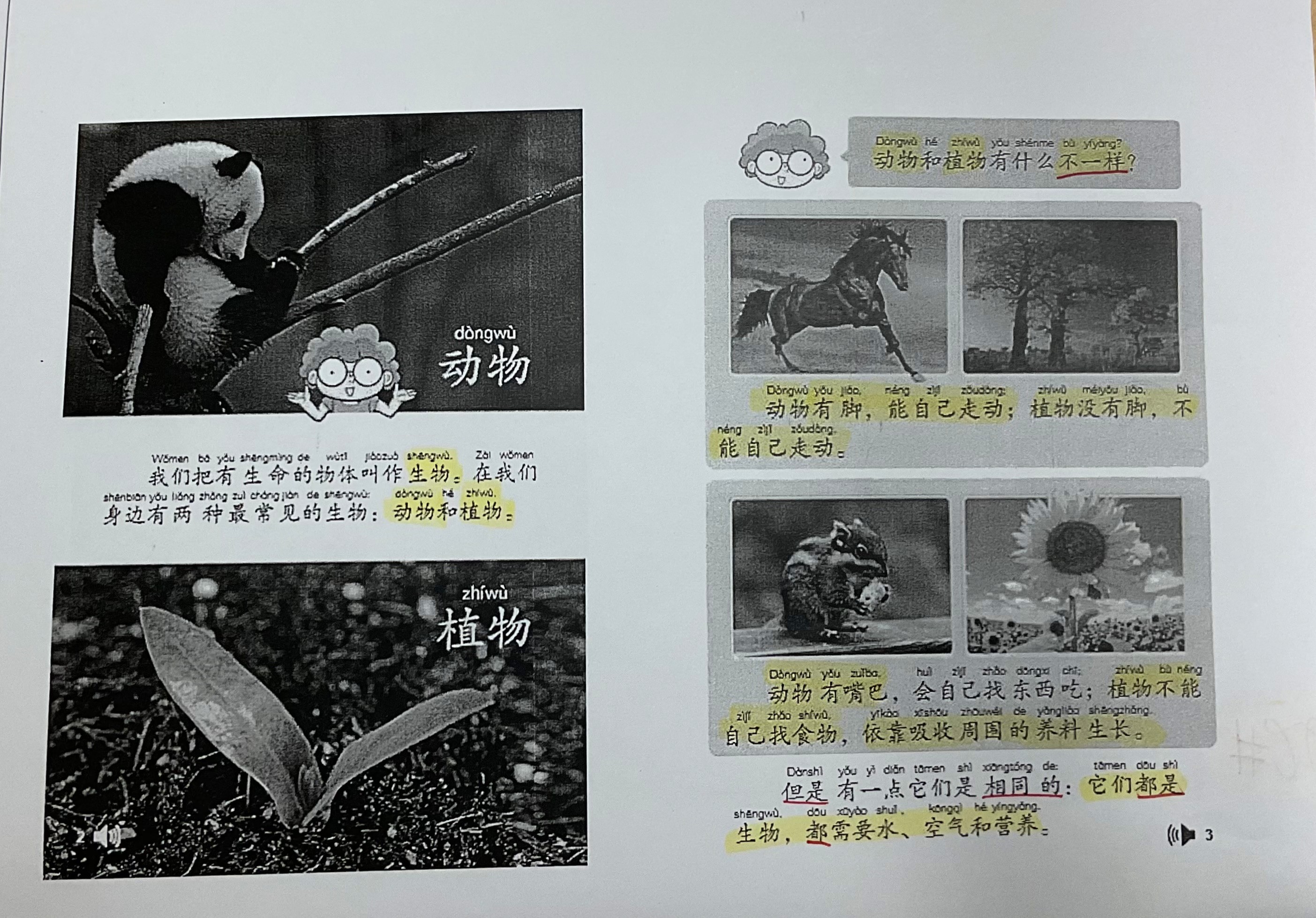
Teachers can only see the end result
WHY DO TEACHERS PREFER PHYSICAL BOOKS?
I interviewed 5 Mandarin teachers to understand what prevented them from using the digital library and 3 English teachers to understand what effective literacy instruction looks like.
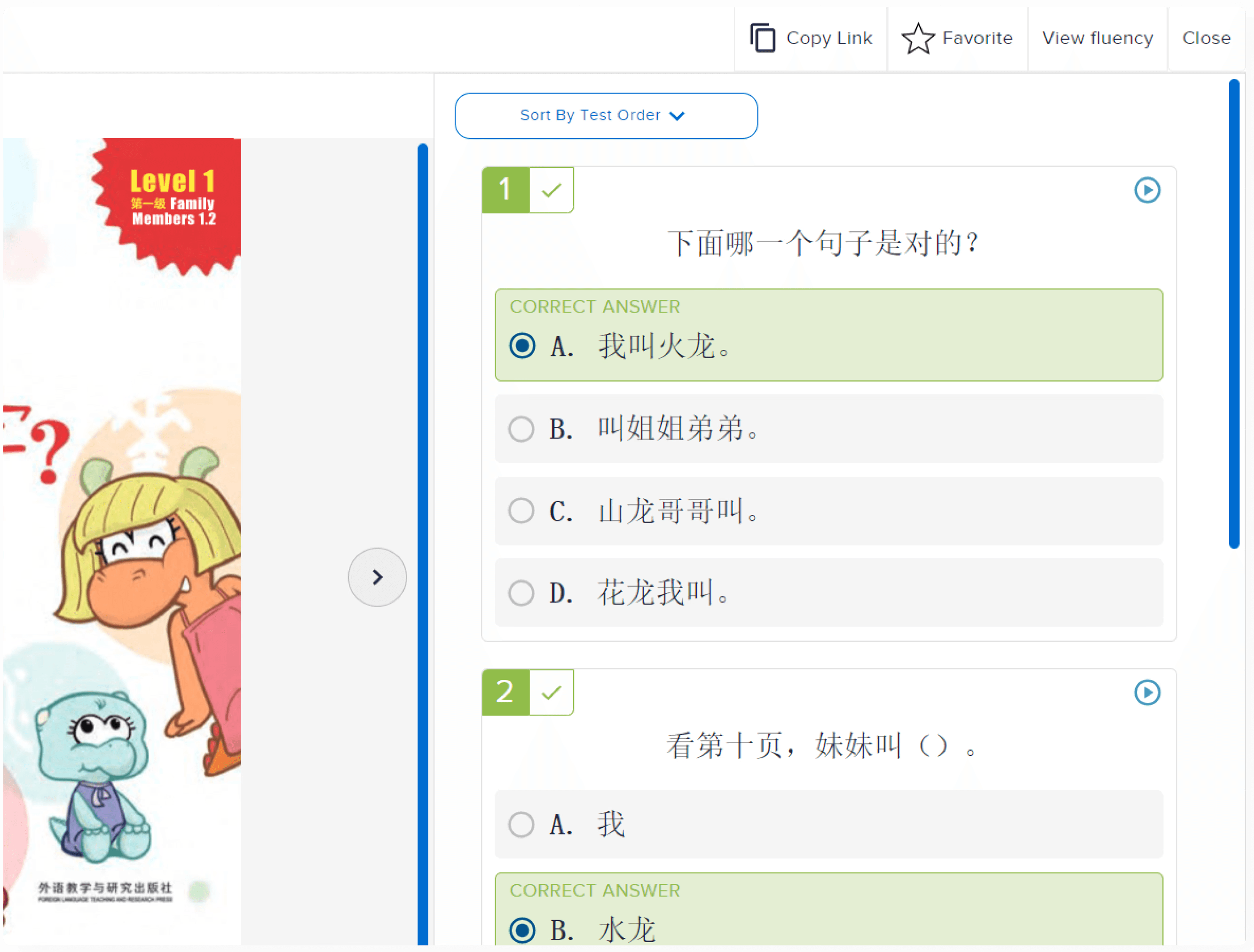
The quizzes students do at the end of each book can't solve teachers' primary need to understand student thinking:
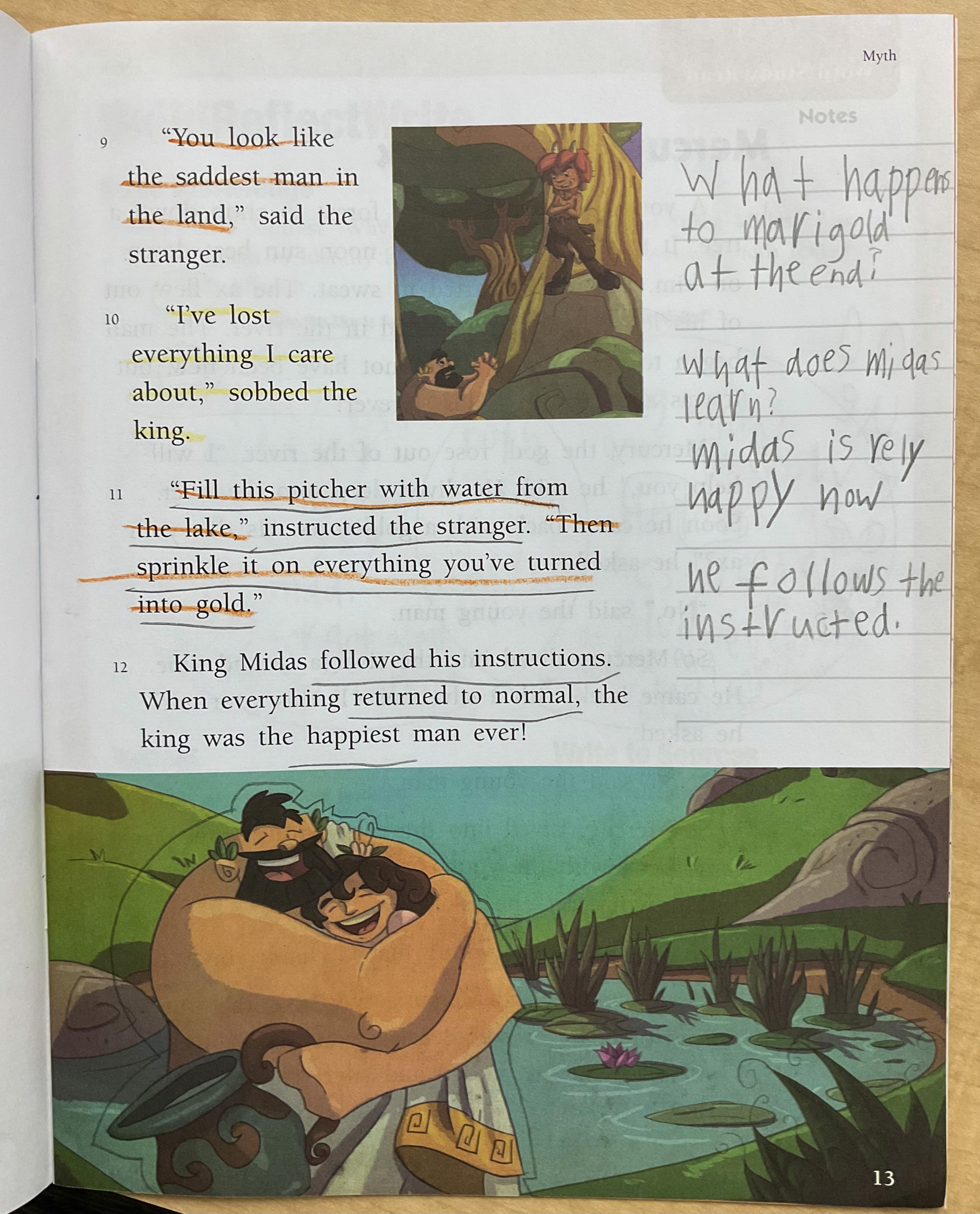
Teachers needed to see student annotations to understand comprehension
English teachers revealed annotation is essential to literacy instruction
What Teachers See Now
What Teachers Actually NEED
“
Having the annotation feature can help me understand what the students are thinking, and is easy for me to use it to show learning progress."
S. Zhang, 2nd grade Mandarin teacher
We now know the why, then…
WHAT SHOULD I BUILD FIRST?
Based on research, I identified two gaps in the digital library.
Annotation tools
(giving students tools to annotate)
VS
Annotation collection
(giving teachers insight to student thinking)
✔️ Teachers valued SEEING student annotations, not just students CREATING them
✔️ Annotation tools are common, but the ability for teachers to view annotations is the rare, high-value feature that addresses the core need. (Based on analyzing existing literacy platforms)
📈
Interview insights validated prioritizing collection over the tools
*All quotes translated from Mandarin to English. Original interviews conducted in Mandarin.

K. Liu, 5th grade Mandarin teacher
“
Being able to annotate is good, but I won't be able to see what they highlight…it would only be helpful if I am able to see what they annotate.”

S. Dalton, 3rd grade Mandarin teacher
“
The annotations needs to be checked by teachers, otherwise it just becomes a drawing tool, then it wouldn't be as helpful.”
I decided to prioritize annotation collection, allowing teachers to view student annotation because…
KEY DESIGN DECISIONS
01
Reducing user friction
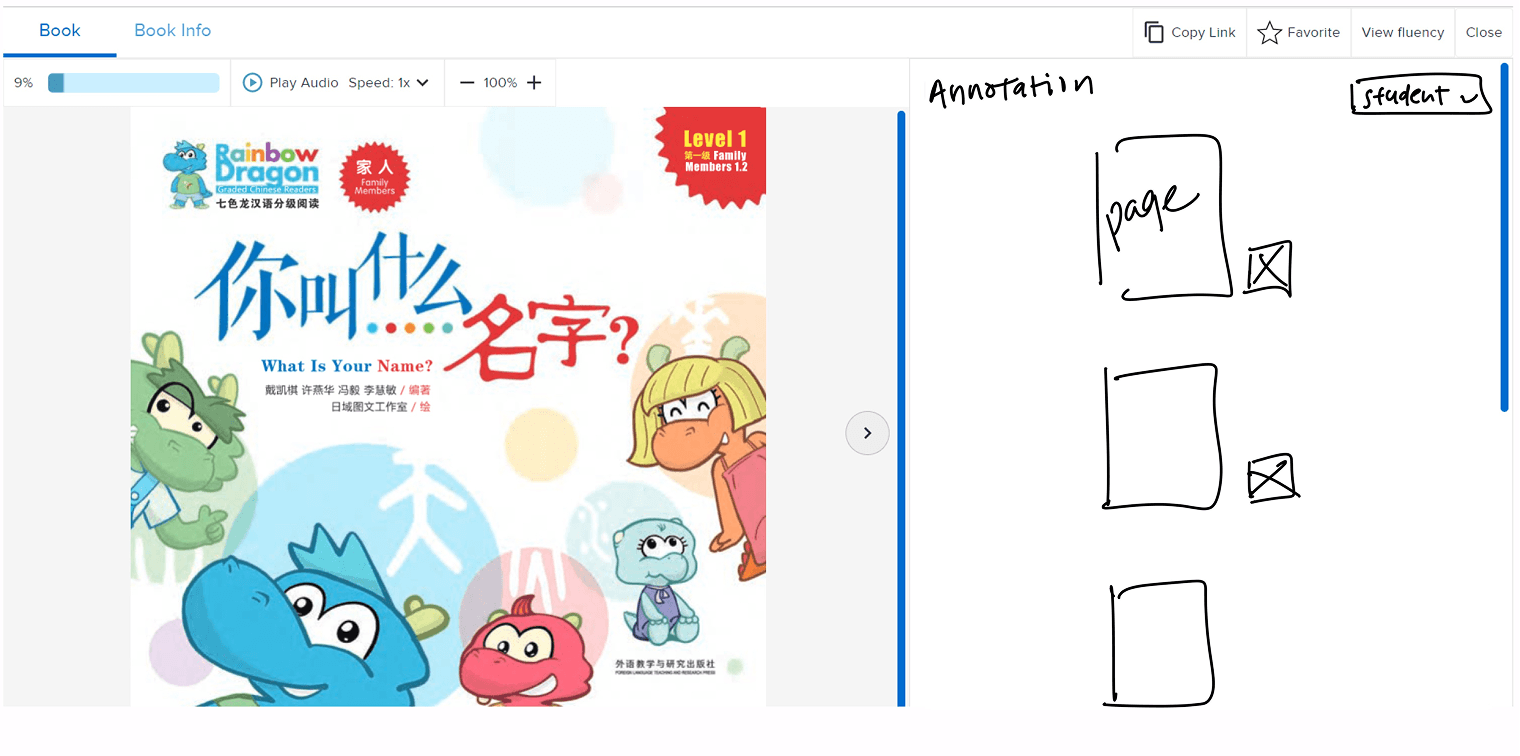
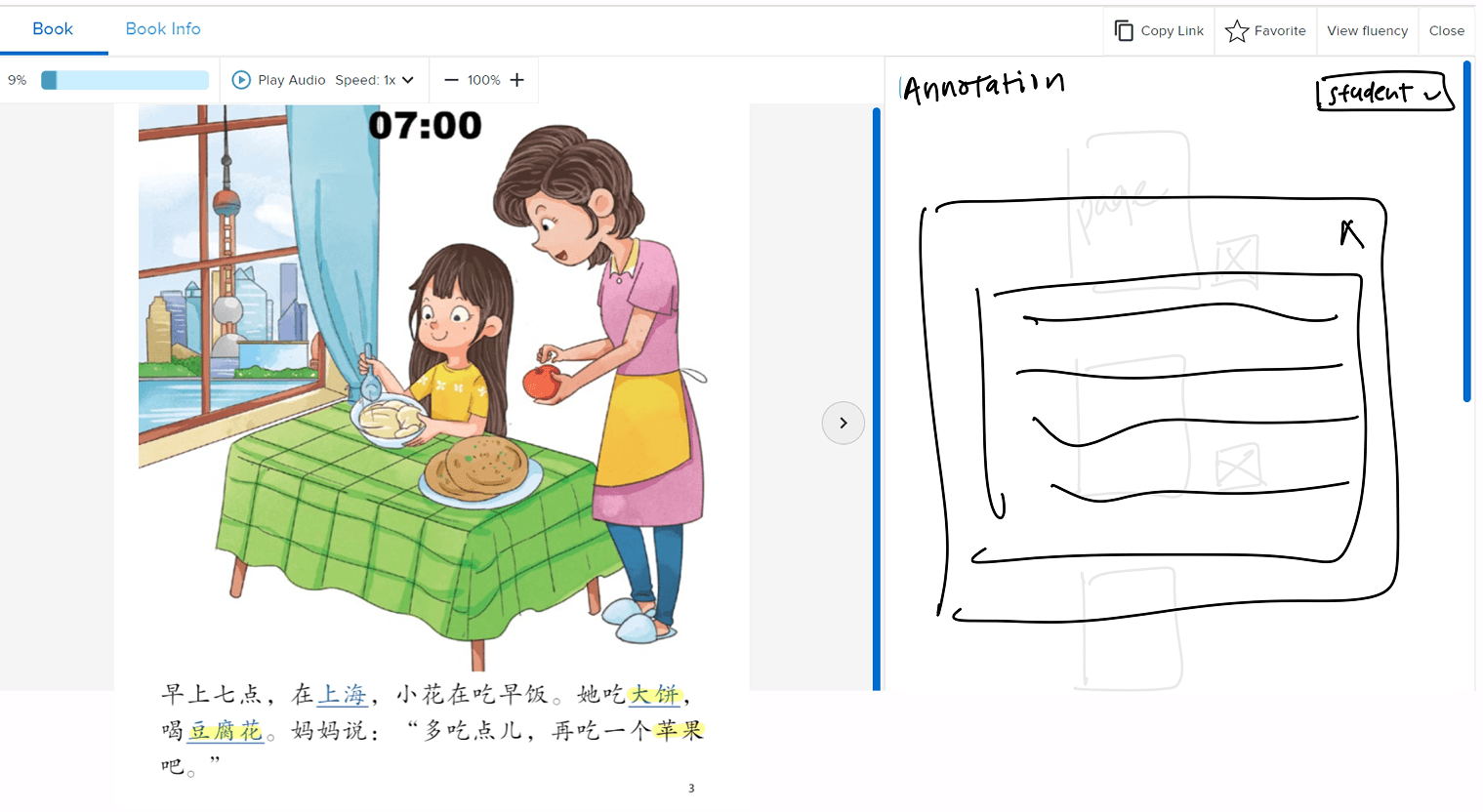
Add annotation viewing to current digital book flow
✓ Fits existing mental model
✓ Faster access
✗ Implementation Uncertainty
Teacher currently have access to students' reading history
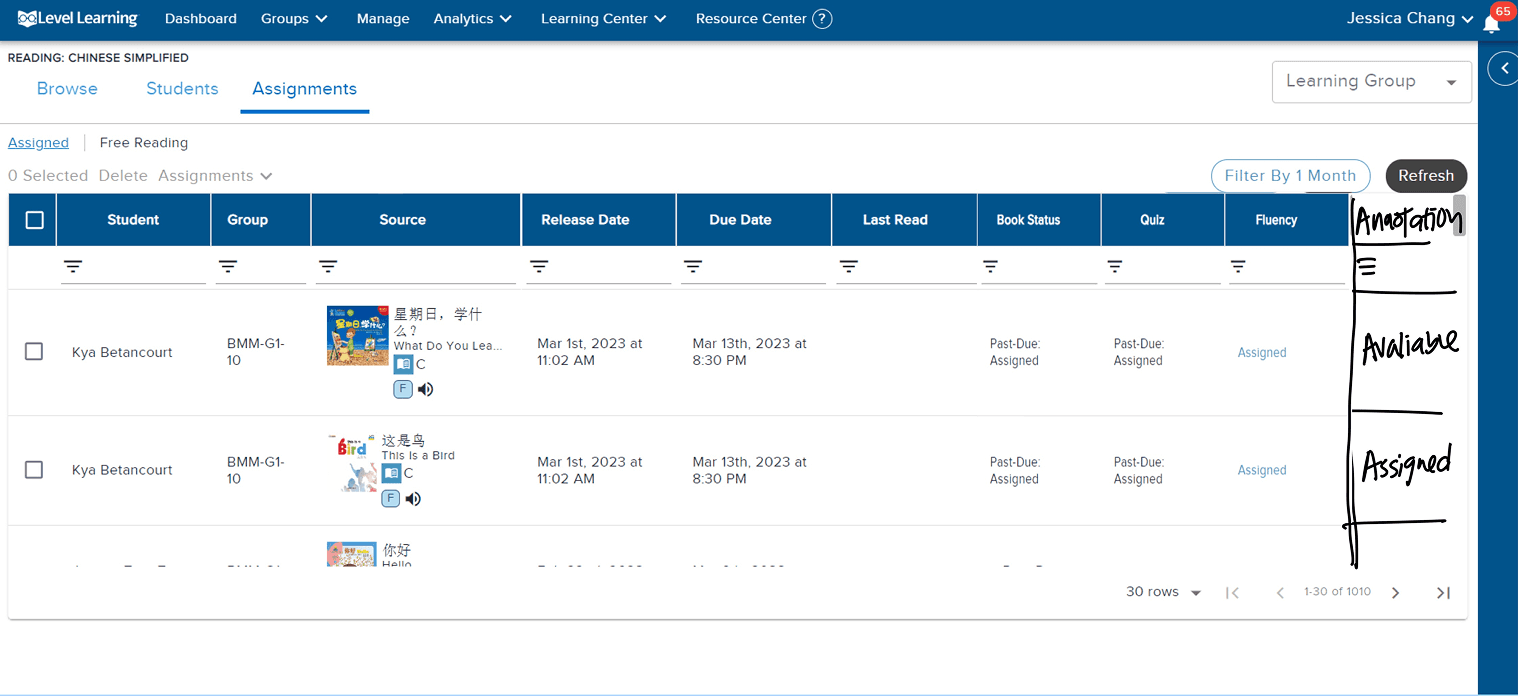
The existing story page where teachers can currently view quiz result
Other option explored:
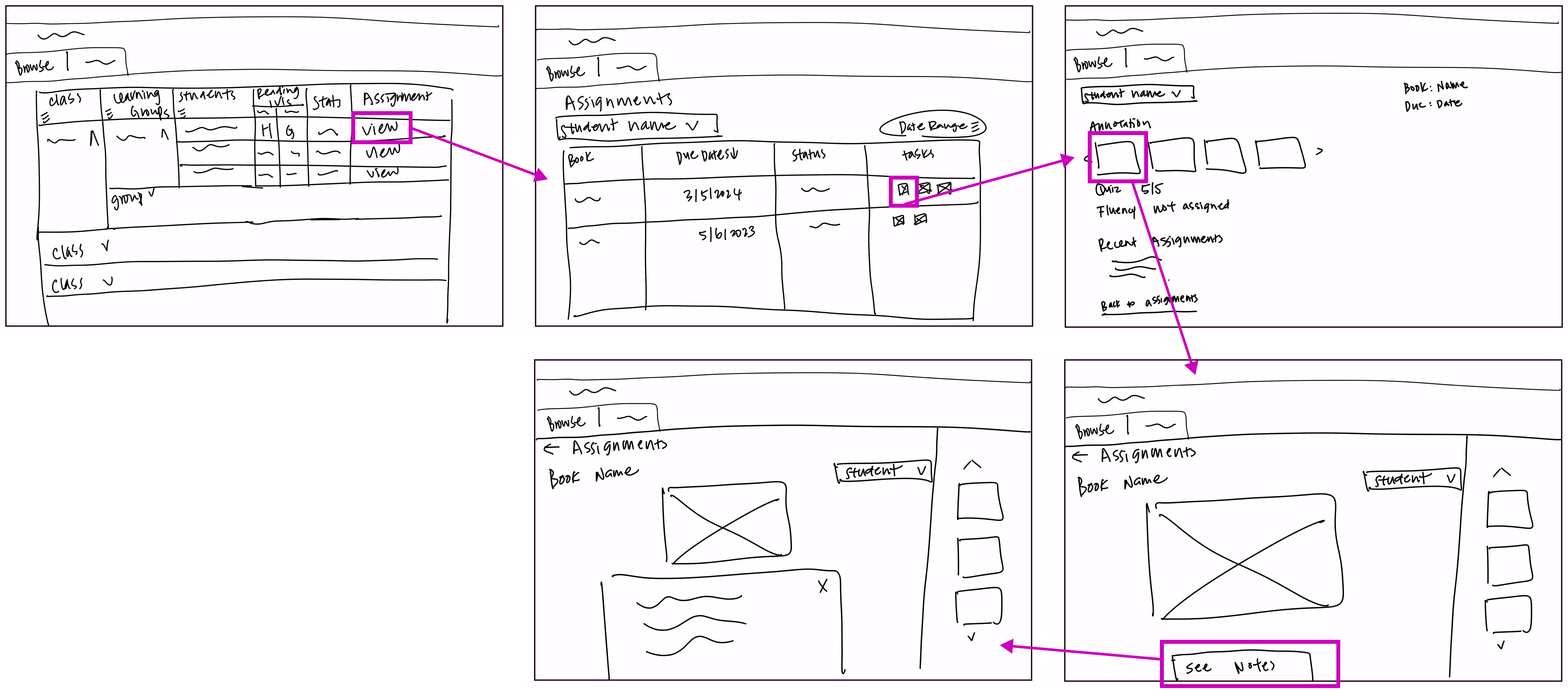
Create dedicated annotation pages
✓ Purpose-built, clean experience
✗ New navigation to learn
✗ Extra steps to access
02
Support Text + Audio Annotations
Students express thinking orally before they can write fluently.
Drawing on 10 years of language teaching experience, I designed flexible viewing where teachers can read text OR listen to audio.
✓ Teachers capture insights from all students, not just strong writers.
✓ Inclusive and accommodating for students of all language levels
✗ Implementation Uncertainty
A. Yao, Kindergarten Mandarin teacher
“
I like the option of voice and written memo. This will help my lower students who can't write in Chinese yet."
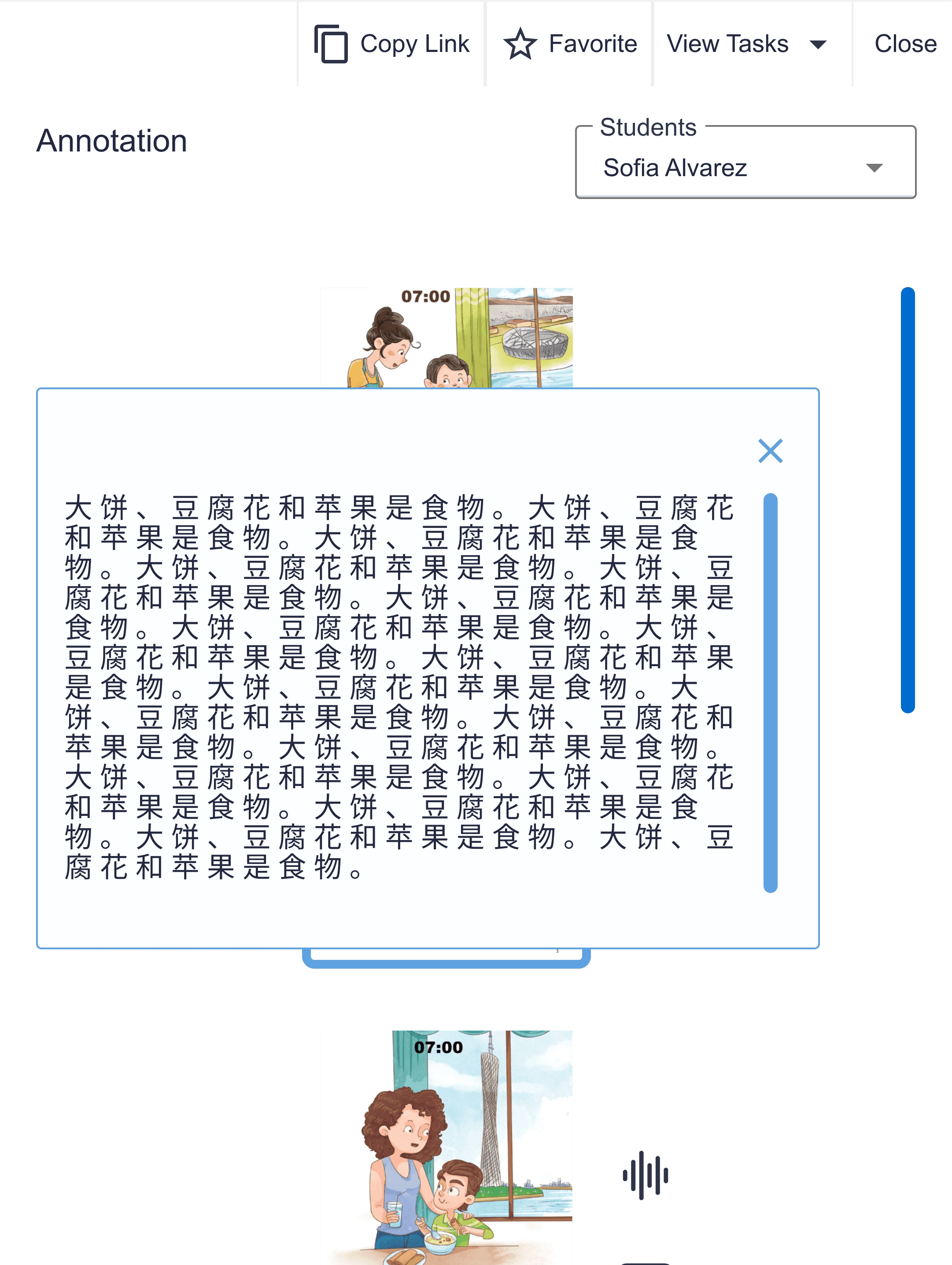
Voice annotation
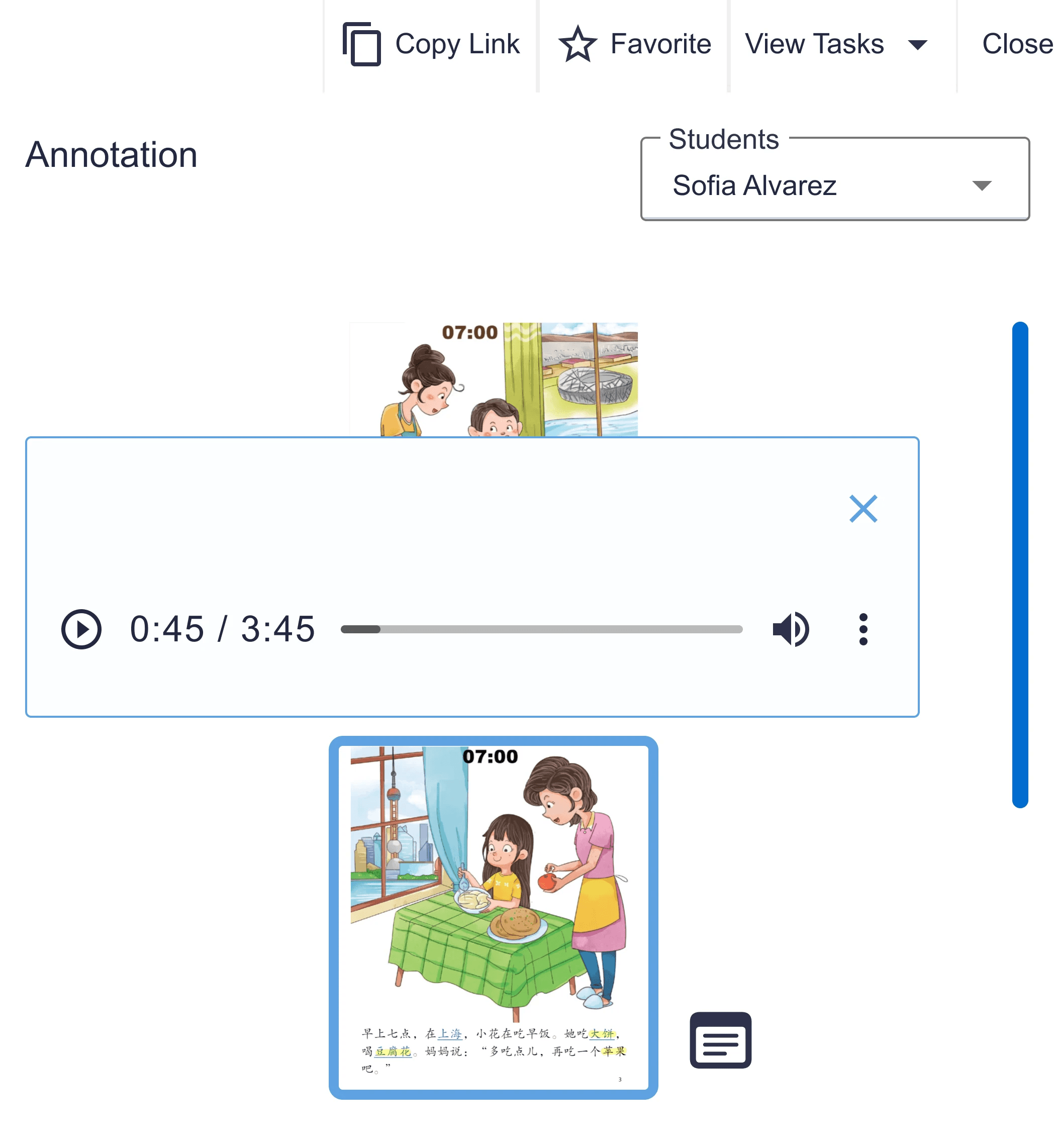
Typed annotation
THE SOLUTION
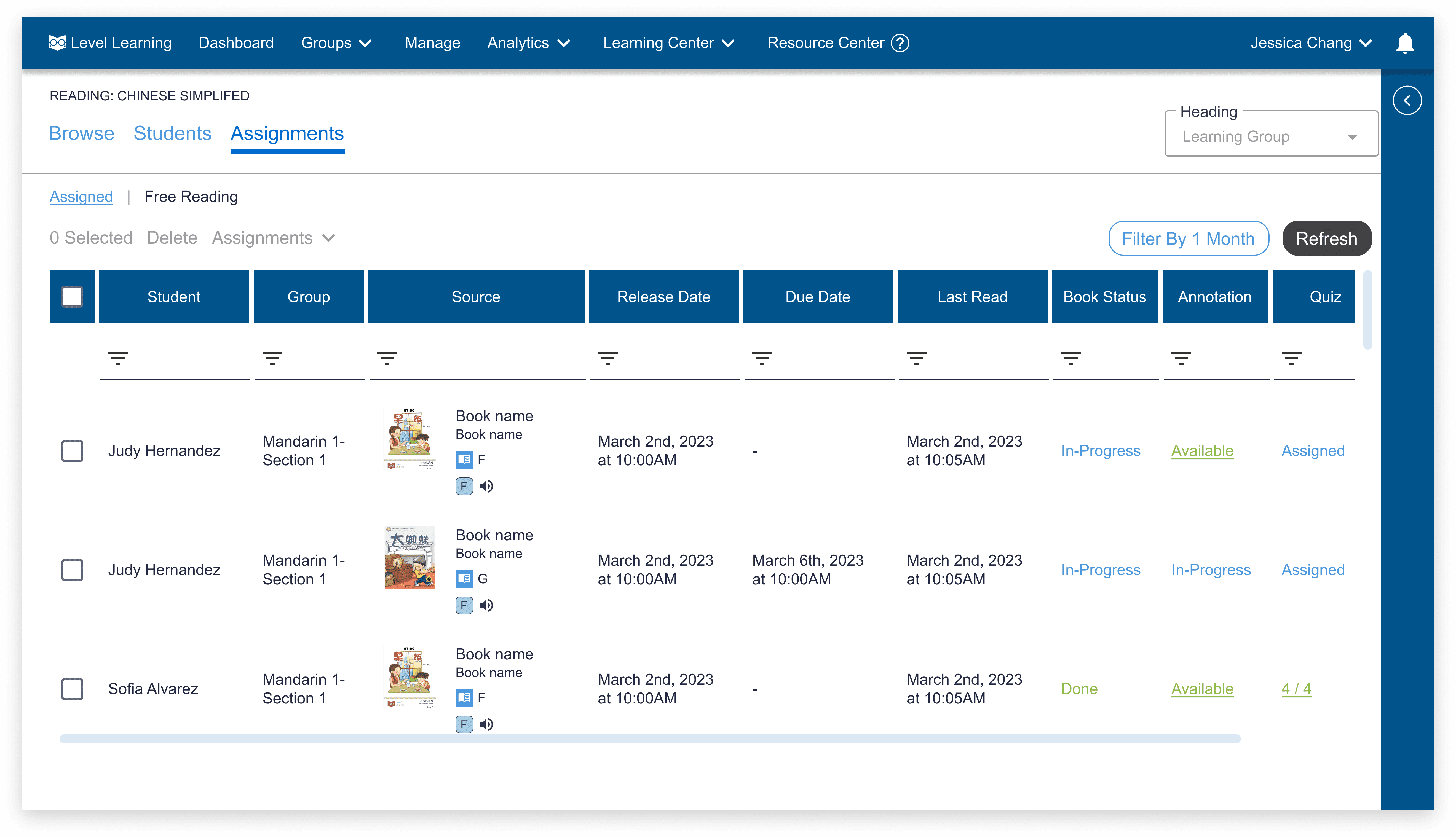
Integrates student annotations into teachers’ existing reading history view.
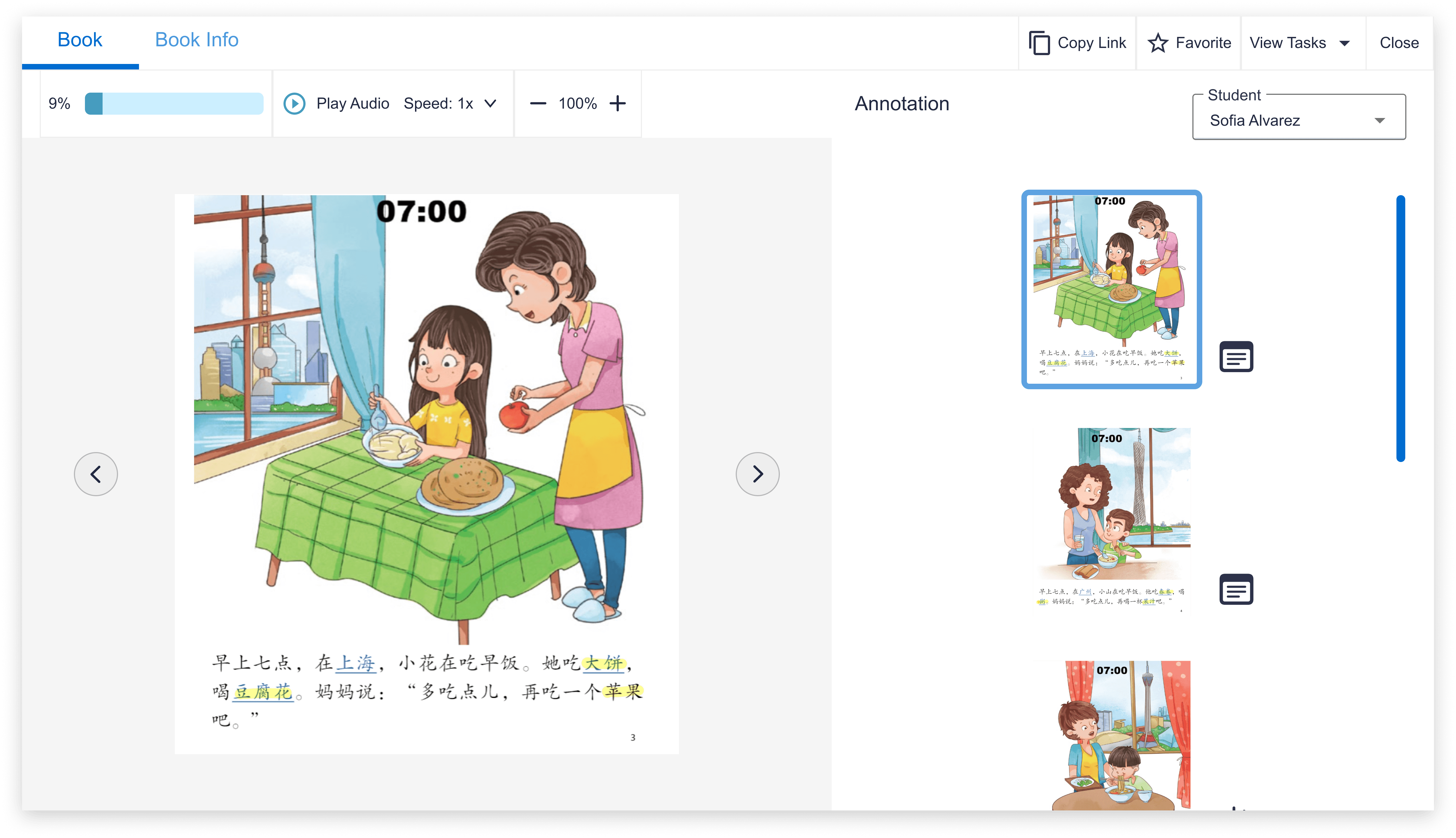
Teachers can choose to read the book in order or jump directly to pages students have annotated.
Page annotation indicator icon, helping teachers quickly identify which pages contain their notes.
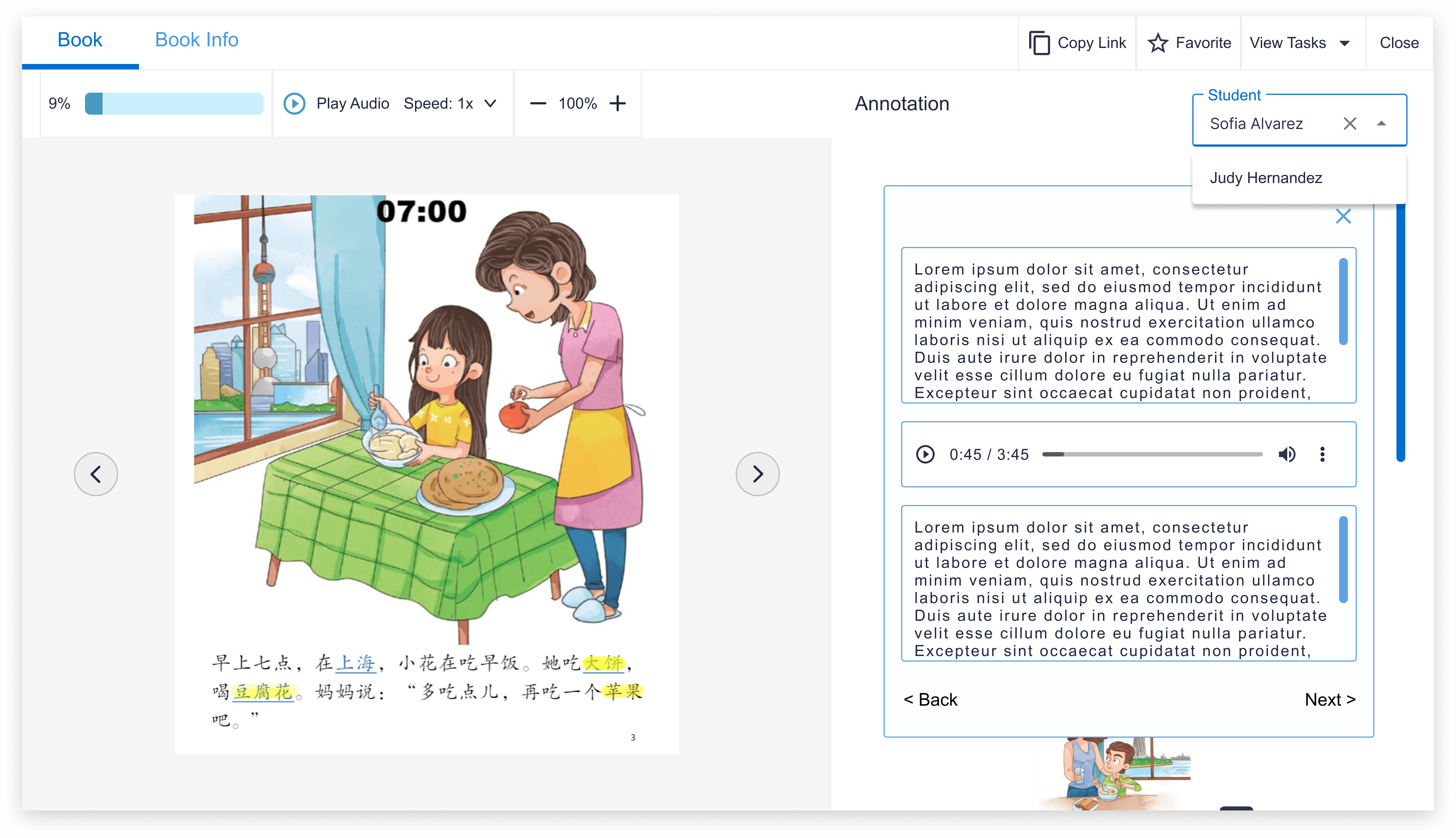
Voice and typed notes offer an inclusive option, accommodating students of all skill levels.
jch3 design
cj.chang06@gmail.com